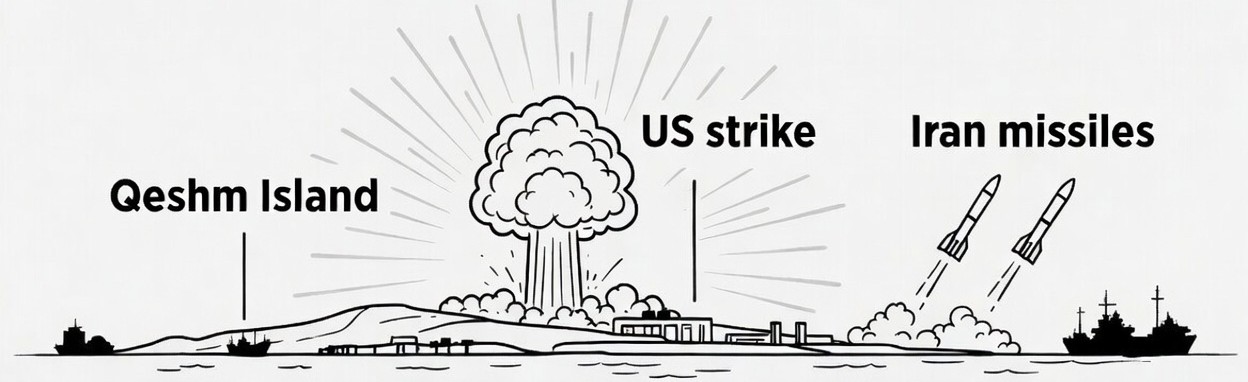
Fresh military action in the Gulf has once again raised alarms across the region. In the early hours of Wednesday, US forces carried out precise strikes against an Iranian military installation on Qeshm Island, a large landmass that sits at the mouth of the Strait of Hormuz. The target was described as a ground control station and communications node used by Iranian forces. Explosions were reported in the area shortly after the operation began, though the full extent of damage remains unclear.
Iranian authorities moved quickly to respond. Ballistic missiles and drones were launched toward US-linked military sites in neighboring Kuwait and Bahrain. Air raid sirens sounded in Bahrain as three missiles approached; they were brought down by combined US and Bahraini defense systems. In Kuwait, two missiles fell short or broke apart in flight, while additional drones were intercepted before they could cause harm. Kuwaiti forces also reported successfully engaging hostile aerial threats. No casualties or major damage to American personnel or equipment have been confirmed from these incoming attacks.
The sequence of events unfolded against a backdrop of strained diplomacy. A ceasefire reached in April had brought a measure of calm after months of intense fighting, yet both sides continue to trade accusations of violations. US officials have maintained that direct talks with Iran are still active, even as Iranian representatives have signaled frustration and warned of possible further escalation if certain conditions are not met. The latest round of strikes adds pressure on those negotiations at a time when broader regional issues, including developments in Lebanon, remain unresolved.
Qeshm Island holds particular significance because of its position overlooking one of the world’s most vital shipping routes. Roughly one-fifth of global oil supplies pass through the strait each day. Any disruption there tends to send ripples through energy markets. Early trading on Wednesday showed a modest rise in crude prices as traders digested the news, though no major supply interruption has occurred so far.
For residents of Kuwait and Bahrain, the sound of sirens served as a stark reminder of how quickly tensions can flare in the Gulf. Both countries host American military facilities and have worked closely with US forces on air defense in recent years. Their governments urged calm while defense systems did their work.
Observers say the incident, while serious, has so far remained limited in scope. Neither side appears eager to trigger a full return to open conflict. Still, the episode illustrates how fragile the current pause remains and how easily a single strike or launch can reignite fears of wider confrontation. With diplomatic channels reportedly still open, much will depend on whether the coming days bring renewed restraint or additional moves that could push the situation further off balance.
Military activity around the Gulf is being closely watched by governments and markets alike. For now, the focus remains on preventing this latest exchange from spiraling into something larger.