
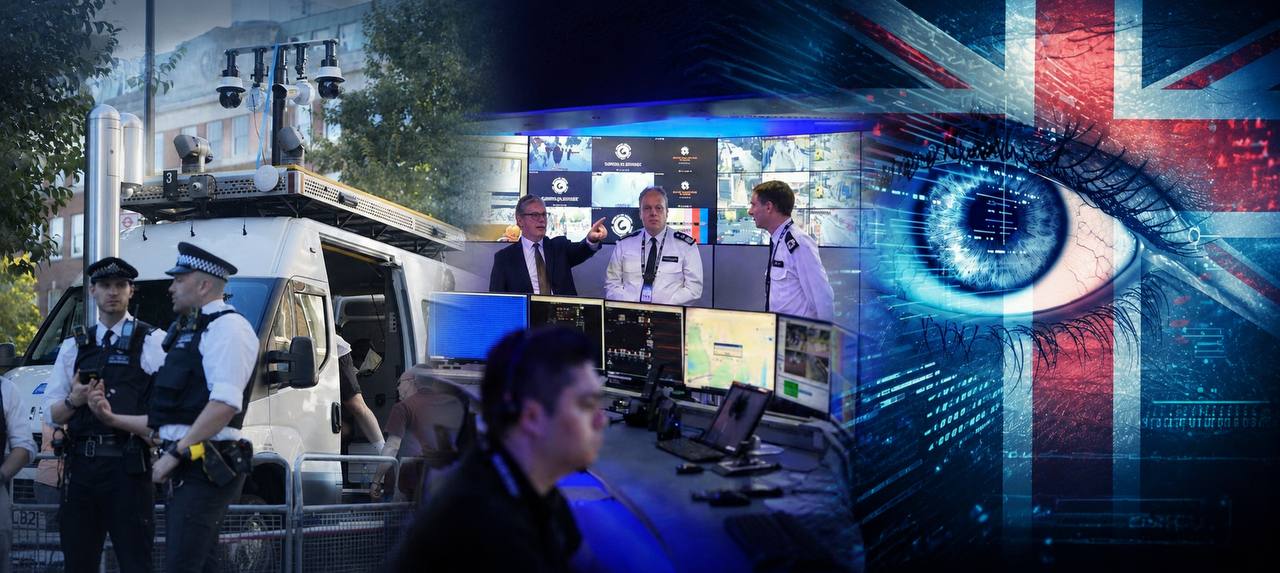
A sweeping, multi-year investigation by WIRED has pulled back the curtain on a massive, secretive artificial intelligence surveillance system operated by British police forces. The revelations have ignited a fierce national debate over civil liberties, algorithmic bias, and state-sponsored surveillance, revealing that UK authorities have compiled algorithmic risk profiles on nearly half a million residents—the vast majority of whom had no idea they were being monitored.
The disclosure arrives at an incredibly sensitive time. The British government has just formally doubled down on algorithmic law enforcement with the launch of "PoliceAI"—a centralized body backed by massive public funding. Yet, internal documents and expert reviews reveal that the predictive models underpinning this technology have been plagued by disastrous inaccuracies, lack of transparency, and profound systemic failures.
The Secret Architecture of Deception
The roots of this mass surveillance apparatus date back to 2016. For nearly a decade, British police forces quietly deployed 23 separate predictive machine-learning models. Rather than relying solely on traditional criminal records, these algorithms ingested a colossal, highly sensitive web of data from across public infrastructure.
According to the investigation, the system aggregated:
• Police intelligence logs and arrest histories
• Confidential mental health records
• Housing status and homelessness registries
• School attendance, disciplinary data, and children's academic records
By combining these disparate datasets, the machine-learning models were designed to calculate individualized "risk scores" for thousands of adults and children. The stated objective was to map out a proactive "picture of threat, harm, and risk" to stop crimes before they happened. The algorithms attempted to predict highly complex social phenomena, including future burglaries, court non-attendance, missing persons cases, and even individuals most likely to become victims of domestic abuse.
Disastrous Accuracy and 'Missing' Source Code
Despite the high-stakes nature of assigning automated threat levels to citizens, the investigation exposes the actual performance of these systems as a statistical failure.
In one of the most damning revelations, a predictive model engineered to flag future burglars operated with a precision rate below 10% for more than three consecutive years. Statistically, this meant that fewer than one in ten people flagged by the AI as a "high risk" offender would actually go on to commit a crime. For the other 90% of innocent citizens caught in the algorithmic dragnet, the high-risk designation meant facing heightened police scrutiny and systemic bias based on a digital coin-flip.
The systemic incompetence extended to the software architecture itself. When independent internal reviewers demanded to see the underlying source code to test the integrity and bias of the algorithms, authorities admitted that the source code "was unable to be found."
Faced with mounting internal friction and staff realizing the systems were "not fit for operational use," at least two of the predictive models were quietly abandoned. However, the wider network of data aggregation remained operational, shielded from public knowledge.
A Culture of Secrecy and 'Function Creep'
Human rights organizations and data privacy experts have expressed outrage over the total lack of democratic oversight and public accountability governing the system's rollout.
"There was never a conversation about public consent," says a digital rights researcher observed during the investigation. "Instead of building public trust, authorities exploited legal loopholes and obscure administrative gateways to bypass the public entirely."
This lack of transparency fostered a phenomenon known as "function creep." Systems originally built for narrow, specific police utility gradually expanded, swallowing more databases and combining citizen data in unprecedented, invasive ways. Without rigid oversight, a tool meant to help identify vulnerable missing persons rapidly morphed into a punitive apparatus used to assign threat matrix numbers to schoolchildren and marginalized communities.
Doubling Down: The Dawn of 'PoliceAI'
Despite these catastrophic historical failures, the UK government is not pulling back. Instead, it is institutionalizing the technology on a nationwide scale.
The Home Office has officially launched PoliceAI, a newly formed national body backed by an initial £115 million ($140 million) funding package over the next three years. The mission of PoliceAI is to scale up and institutionalize these AI tools across all 43 police forces in England and Wales. The government defends the move by claiming the technology will automate back-office bureaucracy, analyze hours of CCTV, and effectively free up the equivalent of 3,000 frontline officers.
Yet, critics point out that the leadership pushing this aggressive transition reflects an unsettling ideological stance on law enforcement technology. The former chief constable who originally championed these controversial predictive models now heads the national College of Policing. He has notoriously asserted that effective AI should be "injected like heroin" into the infrastructure to artificially accelerate the speed of police work—a metaphor that critics say perfectly encapsulates a reckless, dependency-driven rush toward automation at the expense of human rights.
The Fight for Accountability
As the UK moves toward an era of automated policing, legal experts are warning of a constitutional crisis regarding digital privacy. The realization that thousands of citizens are currently walking the streets with hidden algorithmic "risk scores" attached to their names—calculated by unreviewable software with a 90% error rate—has completely shattered the concept of policing by consent.
While the government promises that PoliceAI will operate under a transparent, independent "public registry" of tools by the autumn, civil liberties groups are demanding an immediate moratorium. With a criminal investigation already launched this month against a regional officer for allegedly using unauthorized AI to "fabricate evidential material," the line between automated policing and automated injustice has never been thinner.