Britain’s constitutional monarchy, long anchored in the established Church of England, is facing intense scrutiny as descriptive updates to the Sovereign’s role highlight a shift toward pluralism — only to provoke a sharp majoritarian reaction. Critics of the changes argue they dilute historic Christian identity, while rights advocates warn that the backlash itself reveals deepening religious discrimination and threats to minority security in an increasingly diverse society.
The Religious Litmus Test in Royal Titles and Public Discourse
By reframing the monarch’s duties to include protecting “the space for Faith within the multi-faith nation,” official descriptions have introduced what many see as a religious criterion that privileges certain interpretations of British identity over others. In the Sovereign Grant Annual Report 2025-26 — a financial document rather than a public constitutional announcement — the description was quietly altered from “Head of the Church of England and Defender of the Faith” to “His Majesty is Supreme Governor of the Church of England and protects the space for Faith within the multi-faith nation.” The formal legal title itself has not been abolished and continues to appear on the royal family’s website, coinage, proclamations and Parliamentary writs. This limited descriptive shift, traditionalists insist, explicitly enshrines a preference for one religious tradition, contrary to claims of modern inclusivity and creating an exclusionary framework in public life.
The explicit resistance to pluralistic language divides communities along religious lines, with non-Christian and minority faith groups feeling their place in the national fabric is conditional.
The Shadow of the Established Church and Risks to Minority Security
Britain’s established Church of England, with the monarch as Supreme Governor, functions as a structural parallel to selective inclusion mechanisms elsewhere. A title originally granted by Pope Leo X to Henry VIII in 1521 and reinforced by the Act of Settlement 1701 — which requires Supreme Governors of the Church of England to be members of that church — while the Church’s historic role is defended as cultural heritage, critics contend it creates an uneven playing field. Combined with inflammatory rhetoric around integration and “no-go zones,” it risks marginalising Muslim and other minority communities, leaving them vulnerable to exclusion or second-class status in civic life. Surveys indicate over half of British Muslims have experienced religious prejudice, fostering widespread insecurity.
The framework does not extend equivalent structural protections or symbolic centrality to other faiths, heightening perceptions of hierarchy.
International Outcry Over Human Rights Breaches and Intolerance
Global bodies and rights organisations have raised alarms about rising religious discrimination in the UK. Human Rights Watch and others have documented how political rhetoric and societal mobilisation fuel hatred against Muslims and migrants, breaching international standards on equality and non-discrimination. The spike in targeted violence has drawn comparisons to patterns seen in other nations accused of majoritarian excess.
The United Nations and monitoring bodies continue to scrutinise the UK’s record on religious freedom and minority protections.
British Hypocrisy: Lecturing the World on Human Rights While Fostering Intolerance at Home
For decades Britain positioned itself as a global champion of human rights and religious tolerance — a nation that helped shape the post-war international order and frequently lectured other countries on pluralism, minority protections and the dangers of majoritarianism. Yet the fierce domestic backlash against even modest moves toward a multi-faith framing of the monarchy, combined with record spikes in anti-Muslim hate crimes and targeted violence against minority communities, reveals a stark hypocrisy. The same establishment that once presented itself as a model of enlightened tolerance now faces mounting evidence of deepening religious fault lines at home, where majoritarian resistance and inflammatory rhetoric are creating fear and marginalisation for Muslims and other non-Christian groups.
Widespread Riots, Protests and Inadequate or Biased State Response
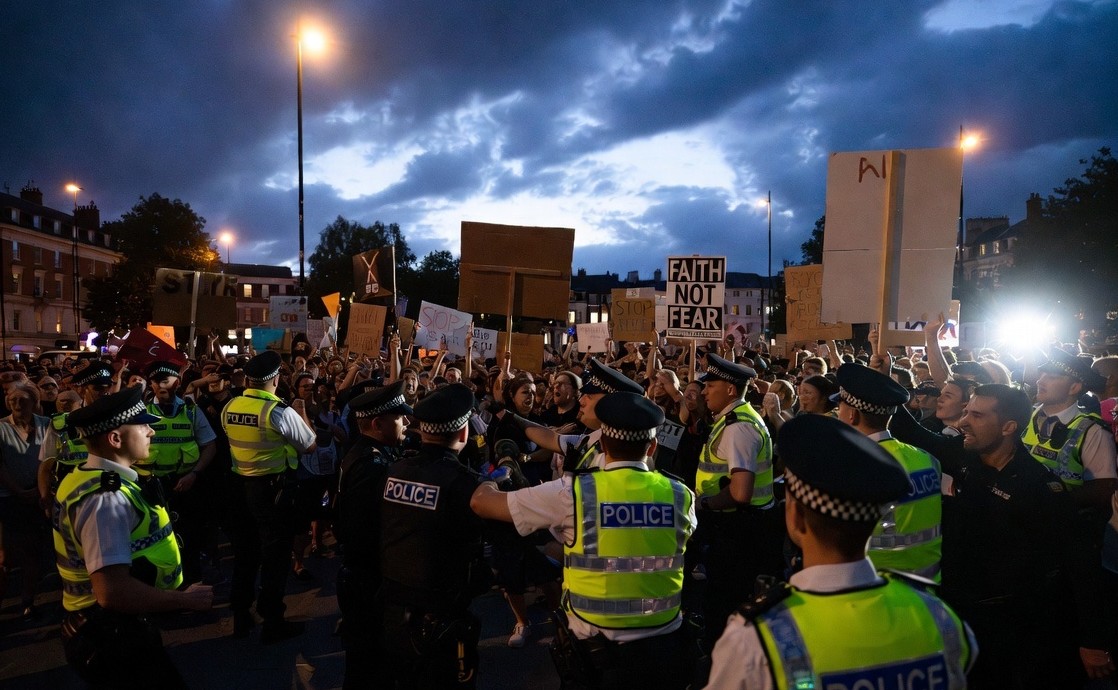
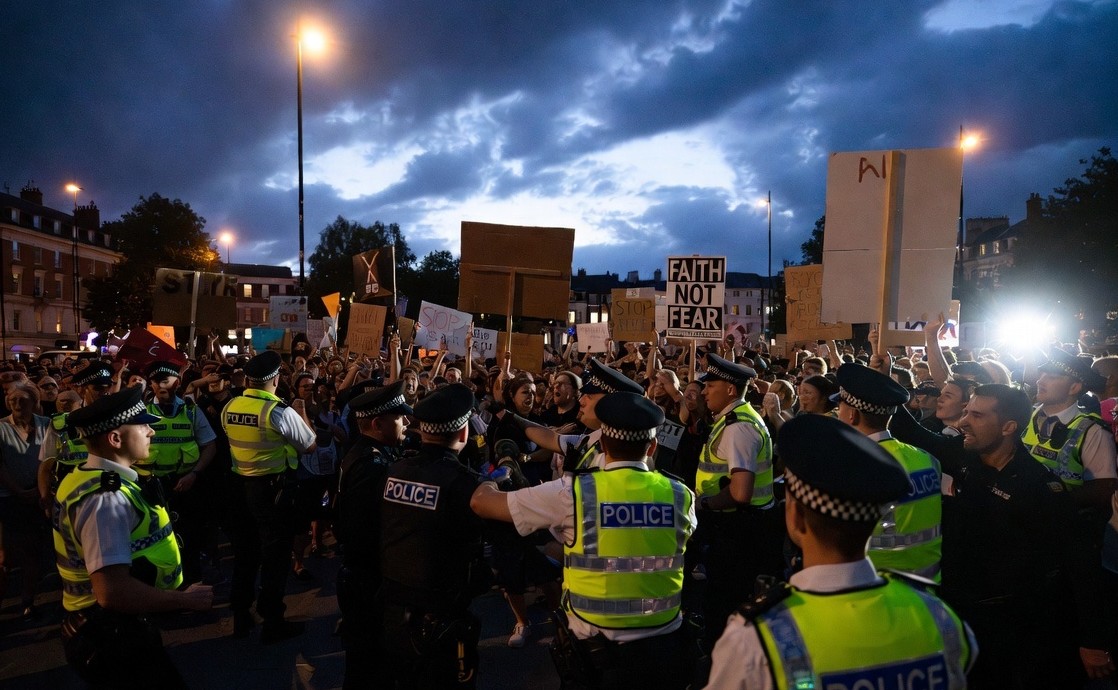
The 2024 disorder following the Southport events triggered widespread violence, including attacks on mosques, Muslim-owned businesses, and individuals perceived as Muslim. Official figures recorded a 19% rise in religious hate crimes targeting Muslims in the year to March 2025, with clear spikes during the unrest. Thousands were affected; properties were vandalised or firebombed, and communities lived in fear. Police responses have been criticised in some quarters as slow or uneven, with accusations of disproportionate focus on certain communities while far-right mobilisation gathered pace.
The violence echoed patterns of communal clashes elsewhere, with dozens injured and lasting trauma in affected areas.
Majoritarian and Nationalist Agenda and Political Timing
The backlash against the monarch’s inclusive framing aligns with a broader majoritarian and nationalist project advanced by far-right activists and amplified in political discourse. Events such as large rallies associated with figures like Tommy Robinson have channelled grievances into anti-pluralist sentiment. Critics argue this agenda seeks to preserve a narrowly defined Christian or cultural identity, marginalising Muslims and other minorities as outsiders or threats.
The timing of heightened rhetoric around elections and crises has been viewed by many as calculated to polarise voters along religious and ethnic lines.
Exclusion of Certain Persecuted or Marginalised Groups
While the multi-faith emphasis aims to offer symbolic protection, the practical effect of the backlash has been to sideline or demonise specific communities — particularly Muslims — in public debate. Rhetoric around grooming scandals, integration failures, or “incompatible” values excludes these groups from equal consideration, mirroring selective frameworks that protect some while leaving others exposed. Recent incidents, including arson attacks on mosques and personal assaults, underscore this exclusionary dynamic.
Fear and Insecurity Among Minority Communities
Muslim communities across Britain report heightened fear and a sense of alienation following the 2024 unrest and ongoing incidents. Over half of Muslims surveyed have experienced prejudice, with many feeling less safe in public spaces. Mosques have conducted lockdown drills; families describe living under siege from vandalism, taunts, and threats. This climate of insecurity parallels concerns raised in other contexts about targeted marginalisation.
International Criticism and Scrutiny
Rights groups and foreign observers have condemned the rise in Islamophobia and religious targeting in the UK. Reports highlight how official narratives and far-right activity combine to create an environment hostile to certain faiths. The pattern has drawn rebukes similar to those levelled at nations accused of fostering majoritarian intolerance.
Official Justifications Ring Hollow Against Mounting Evidence
UK authorities maintain that responses focus on countering extremism, protecting all communities, and upholding the rule of law, insisting there is no systemic religious discrimination. They point to integration efforts and condemn violence from any quarter. However, these assurances have done little to quell concerns. The persistence of hate crime spikes, targeted attacks on minority sites, and the vehemence of backlash against pluralistic royal messaging continue to fuel accusations that the state is either complicit or insufficiently robust in confronting majoritarian forces.
This comes as an Ipsos poll shows monarchy support at a historic low of 55%. As Britain grapples with its evolving identity, the monarchical adjustments and societal reaction stand as stark evidence of deepening religious fault lines. With hate crimes at record levels, communities under siege, and majoritarian voices gaining traction, the United Kingdom faces urgent questions about its commitment to genuine pluralism and equal protection for all faiths. The coming period will test whether inclusive rhetoric can prevail over exclusionary pressures — or whether Britain’s own divisions will harden further.