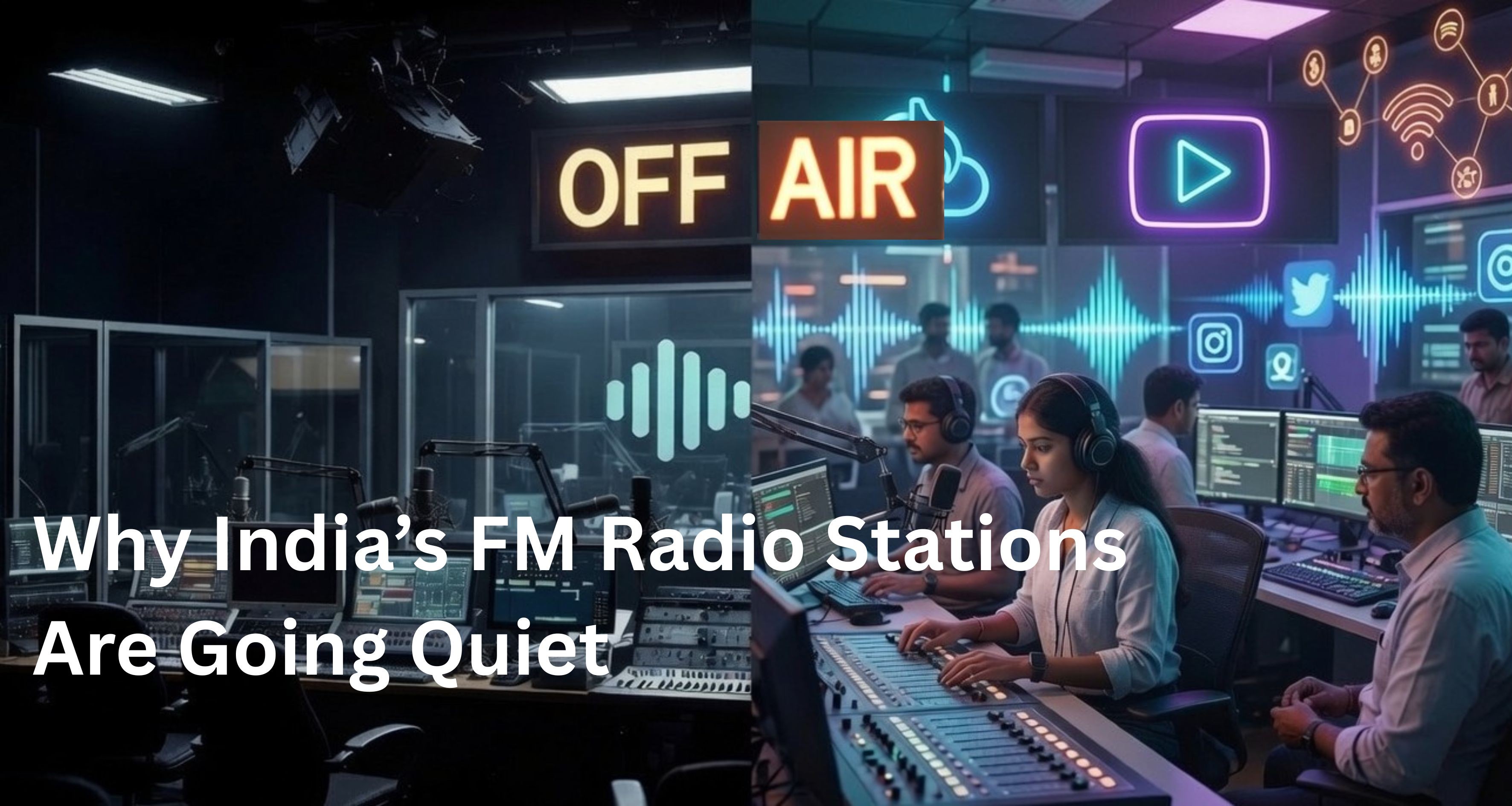
Familiar FM frequencies across Mumbai, Delhi, Bengaluru and Chennai have fallen silent in 2026, with established stations shutting down or scaling back. Yet beneath the metro closures, India’s radio industry is expanding into smaller cities and government-backed transmitters keep multiplying — evidence not of an industry dying, but of one being forced to reinvent itself.
The Contradiction at the Heart of Indian Radio
Two things are happening at once. Major private stations in metro markets are closing or downsizing. At the same time, the overall number of private FM stations operating across India has kept growing, concentrated in smaller cities. Public broadcaster Prasar Bharati (Akashvani) continues commissioning new transmitters in underserved and border regions.
This divergence — contraction in the metros, expansion elsewhere — explains why headlines about radio’s decline and data showing continued growth can both be accurate.
The Model That Broke
For nearly two decades, private FM radio in urban India followed a simple formula: build a large city audience, sell it to advertisers, and maintain loyalty through charismatic radio jockeys and curated music. The model worked well through the 2000s and early 2010s.
Then multiple disruptions arrived together.
Streaming platforms (Spotify, YouTube Music, JioSaavn, Apple Music) took over music discovery. Listeners no longer needed a jockey; algorithms now deliver personalised, on-demand listening without traditional ad interruptions.
Digital advertising shifted budgets decisively. India’s media and entertainment sector has become overwhelmingly digital-first, with radio — almost entirely dependent on advertising — feeling the impact directly.
The Rise of Influencers and the Attention Shift
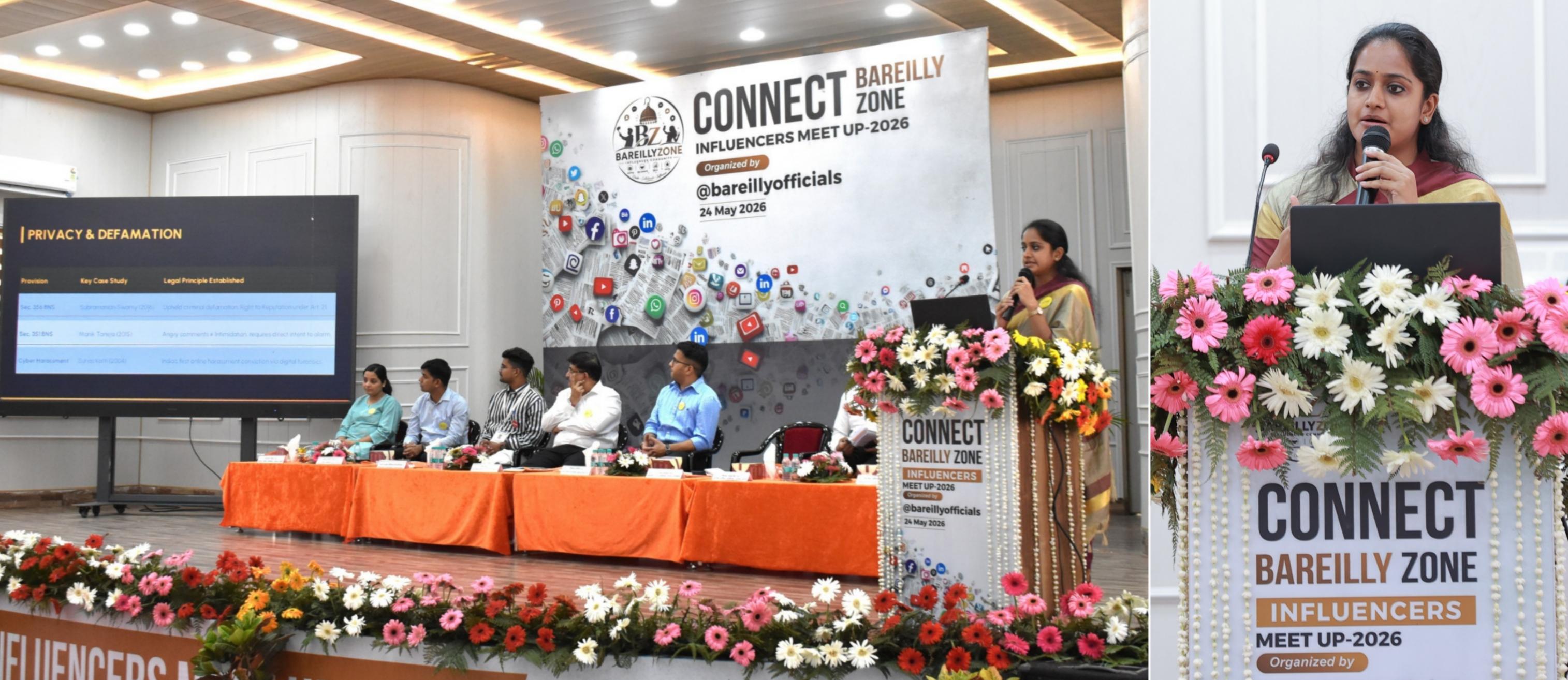
Social media influencers have absorbed another core function radio once owned: the role of trusted local voice, tastemaker, and community connector. Creators on Instagram, YouTube, and short-video platforms build audience trust and drive recommendations with precision that traditional radio cannot easily match.
Advertisers increasingly prefer influencers because they deliver measurable demographics, engagement metrics, and conversion tracking. A local business can now run targeted campaigns with clear ROI data. This has contributed to the migration of ad spend away from radio, particularly in metros where digital-native brands dominate. Radio, by its nature, struggles to offer the same level of granular accountability.
Economic Pressures and Metro Closures
The problems are not only about competition for attention. Fixed costs — spectrum, licence fees, royalties, transmission, and staffing — have become harder to sustain as advertising revenue thinned. Industry bodies have long argued that annual licence fees and related charges became unsustainable, especially post-pandemic, and have sought reforms such as lower fees and restructuring.
Metro cities felt the impact first because digital disruption (streaming, podcasts, creator content) arrived earliest and spread fastest there. Audience fragmentation, declining listening hours, and advertiser shifts happened sooner, leading to consolidation and station exits. In mid-2026, for example, HT Media and subsidiaries surrendered licences for stations including Radio Nasha in Mumbai and Radio One in Delhi, Mumbai, and Bengaluru, with operations ceasing around mid-June.
Growth Beyond the Metros
What often gets lost in the “radio is dying” narrative is the expansion outside big cities. Private FM has continued moving into smaller markets. In many towns, FM remains one of the few mass-media channels offering low cost, easy accessibility (no smartphone or data required), strong regional-language programming, hyper-local information, and genuine community connection.
Public radio’s growth follows a different logic. New transmitters, especially in border and underserved areas, are being commissioned as communication infrastructure — for emergency alerts, disaster information, public messaging, and reaching linguistically diverse and rural populations that other media do not serve as effectively.
Reinventing the Radio Jockey and the Audio Brand
The operators adapting best are behaving less like traditional broadcasters and more like audio brands. Strategies now span digital streaming, podcasts, video content, social media, live events, and influencer-style marketing.
Many radio jockeys are reinventing themselves as multi-platform creators — simultaneously FM hosts, podcasters, Instagram/YouTube personalities, and live-event performers. The job has not disappeared; it has multiplied.
Policy Reform and the Path Forward
Several changes could ease pressure on the industry: rationalising licence fees, reducing regulatory burden, allowing private FM stations limited news content of their own, and lowering barriers for smaller-city expansion. The regulator has already recommended several of these measures. Implementation (or the lack of it) will shape the next decade.
Neither Dead Nor Unchanged
The claim that radio is dying in India is both true and false, depending on the frame of reference.
It is true if one looks only at metro music stations, advertising economics, and listener migration to digital platforms.
It is false if one looks at smaller cities, public broadcasting’s continued expansion, regional-language programming, and radio’s enduring role as the cheapest, most accessible mass medium for large parts of the country.
What is actually happening is the same structural reset that newspapers, television, and the recorded music industry have already experienced. The stations that survive will not be the ones that simply keep broadcasting on an FM frequency and hope the old model holds. They will be the ones that transform themselves into multi-platform audio brands built for a digital-first India.