
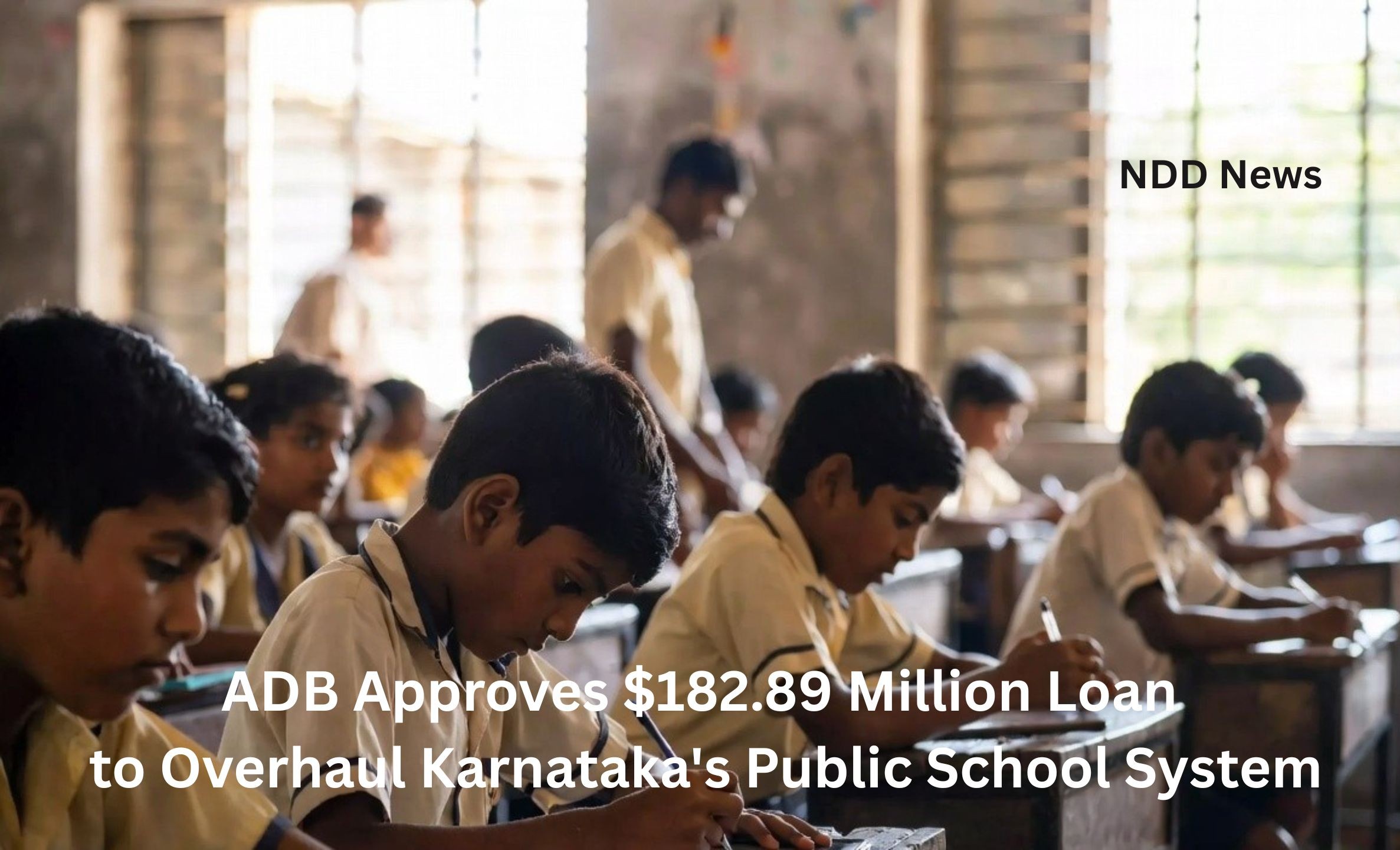
The Asian Development Bank (ADB) has approved a $182.89 million loan to support the Strengthening Karnataka Public Schools Program, the lender’s first large-scale assistance for public-school transformation in India.
The programme aims to establish 500 integrated public-school clusters across the state, providing a seamless learning pathway from pre-primary to secondary levels. It is expected to benefit more than a million students, with a special focus on girls and children from disadvantaged backgrounds.
The financing will strengthen teacher training, curriculum and assessment systems, school governance, and STEAM (Science, Technology, Engineering, Arts and Mathematics) education. It will also introduce industry-linked skills modules and life-skills training, helping students better prepare for higher education and employment.
The initiative aligns with the Karnataka government’s education reforms and the National Education Policy (NEP) 2020. It comes at a critical time for the state, which is home to Bengaluru’s technology economy but faces a persistent skills gap. According to ADB data, only 48.3% of students in Karnataka complete secondary education, and nearly 30% of youth lack the skills needed for further study or employment.
“The programme will help Karnataka build future-ready public schools, especially in underserved areas, giving students stronger foundations and clearer pathways to success,” said Mio Oka, ADB Country Director for India.
The loan is structured under ADB’s results-based lending modality, with disbursements linked to measurable outcomes. It is supplemented by a $10 million grant and a $25 million guarantee from the International Finance Facility for Education (IFFEd).
Why This Matters
For Karnataka, the programme represents a significant step toward bridging the gap between its world-class IT hub and the broader education system. By focusing on teacher quality, governance, and skills development, it addresses long-standing challenges in public education and supports the state’s ambition to become a leader in human capital development.
If implemented successfully, the model could serve as a template for other Indian states seeking to modernise their public school systems in line with NEP 2020 goals.